


Go Back
News
School News
How YCIS Shanghai Nurtures the AI-Native Generation — Told Through an AI Agent Its Students Built
School News
28 Oct, 2026
15 : 00
“What is my first lesson tomorrow?” and “How much maths homework is left?”
“What is my first lesson tomorrow?” and “How much maths homework is left?”
Back home, parents may not know the answer either. So students at YCIS Shanghai discovered a different way to learn: they did not ask a teacher, they did not ask a parent — they built an AI agent themselves through the AI Future Makers Mentorship Programme, and called it “The Study Buddy”.
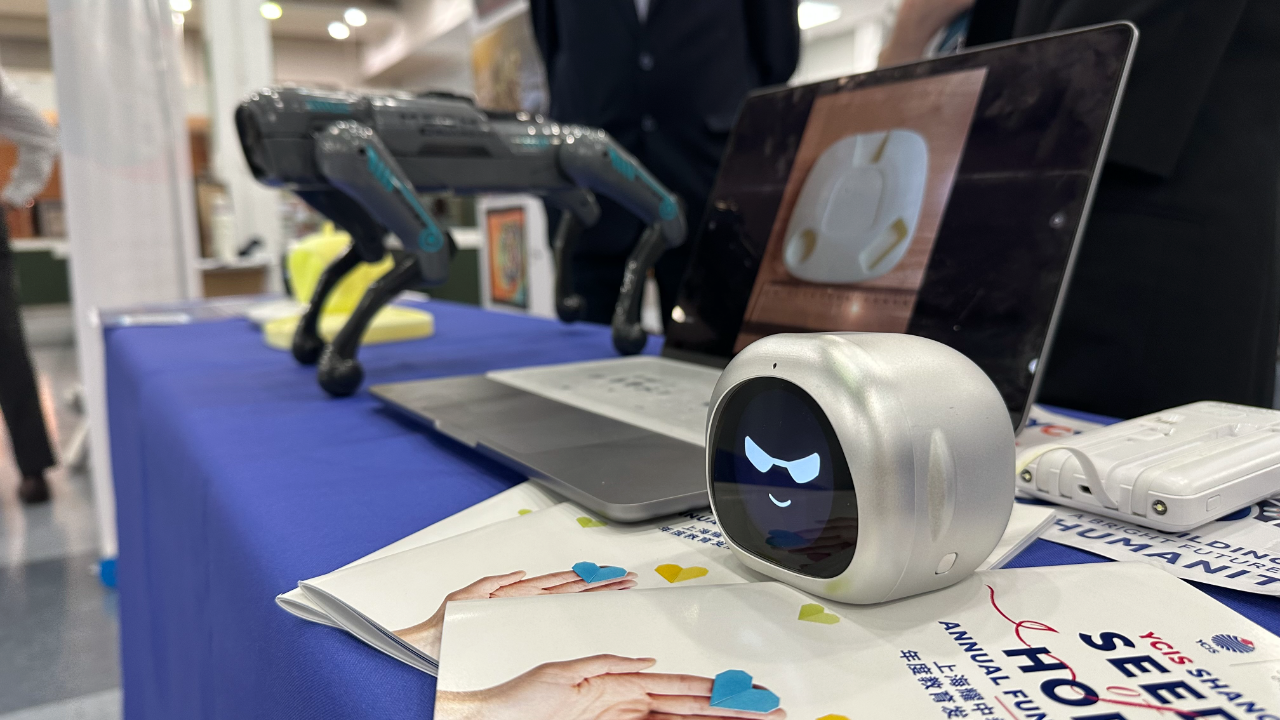
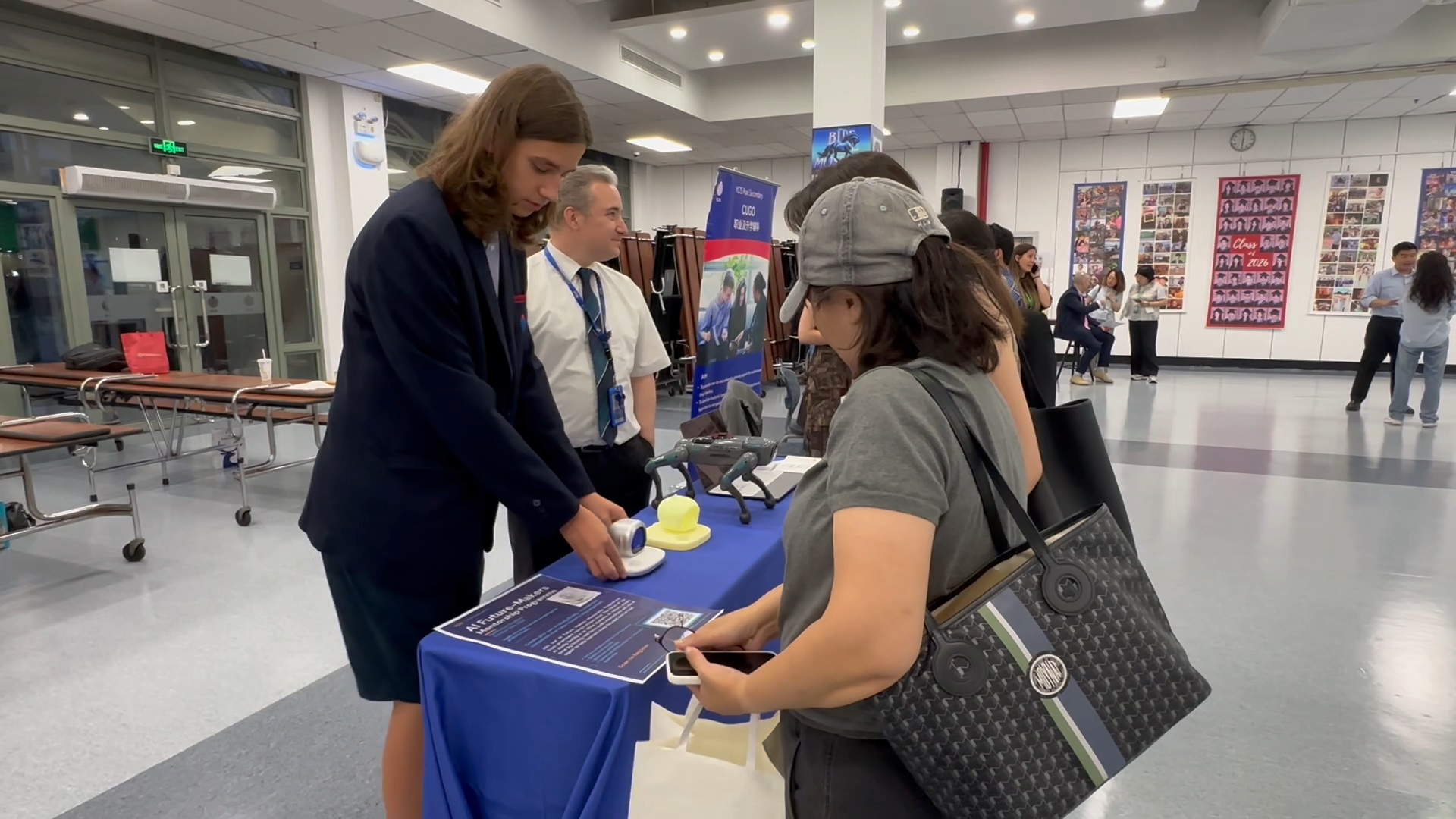
The focus of The Study Buddy is to help students reduce screen time and increase verbal interaction with technology. Ask it a question and it will guide the student to an answer; questions about homework, timetables or assignments are handled for them. The AI agent was developed through the AI Future Makers Mentorship Programme, a long-term project at the school supported by the Seeds of Hope Annual Fund and Narwhal Technology, which offers exclusive mentorship from both industry leaders and teacher mentors.
This AI Agent Was Built by the Students Themselves
Three teams — programming, design and business — bring Year 5 to Year 13 to the same table, with ten-year-olds and eighteen-year-olds revising the same project. The concept came from the students, the solutions were theirs, and draft after draft was reworked until the problems were solved. An external manufacturer supports the hardware, and the final stage will be a business pitch: identifying challenges and solutions, with the hope of eventually bringing The Study Buddy to market.
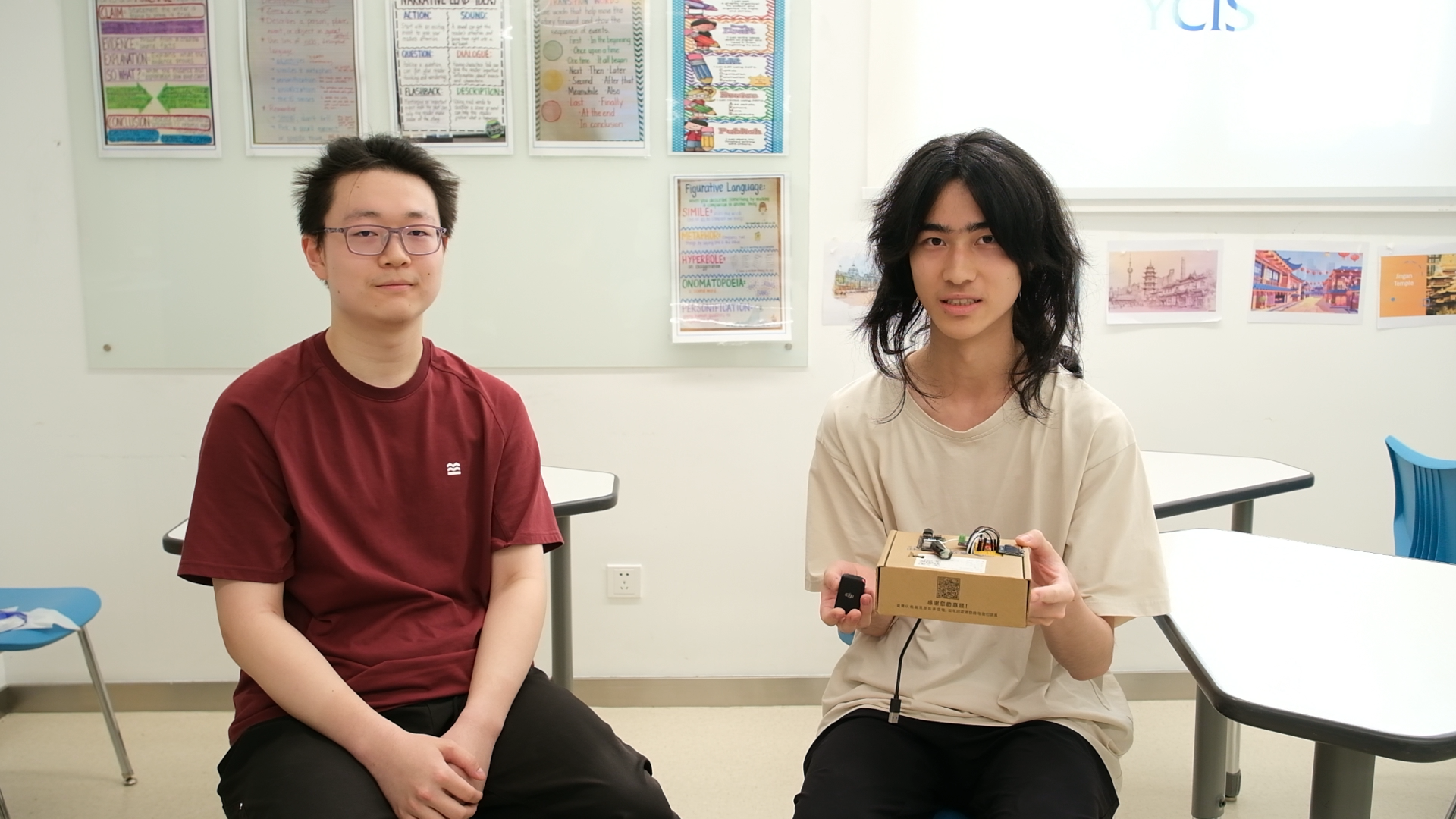
Two of the programmers graduated this year. Jon Lu is now studying Computer Science at University College London, and Eddy Jiang is studying Electronic Engineering at King's College London. One is heading further into software design, the other from code into hardware. The hardest part at university, they say, was not acquiring new knowledge but turning a vague brief into realistic steps you can build from. Thankfully, they had already gained real-life experience through the AI Future Makers Mentorship Programme at YCIS.
So How Does YCIS Shanghai Teach AI?Once the AI Agent worked, a student asked: if it can answer anything, why should I write the homework myself?
This is not a question technology can answer. It does not ask whether AI can reply, but whether a student still needs to think for themselves.
Our answer is not to add another class. AI is not an isolated subject but a thread that runs from Kindergarten through to Year 13. The method is AI², AI-enhanced Inquiry; behind it is AI-Guided Metacognition — knowing how you are thinking.
Every lesson follows the same four steps: I Think → AI Thinks → We Think Together → We Transform Our Thinking. Students should work out their thoughts independently, ask questions with AI, collaborate with AI, then extend their creativity after further reflections. Think first and write down what you already have; decide which part can be handed over to AI; then set its answer beside the teacher’s comments and ask: what has changed in what I originally thought?
Tasks are graded too. Red: no AI at all. Amber: ideas only, feedback only, or designated components only. Green is an AI² task, and comes with a reflection: which thinking I kept, which I handed over.
Five things may not be outsourced to AI: framing the question, designing the inquiry, interpreting data, constructing arguments, evaluating evidence.
The test comes down to one question: without AI, can you explain the topic clearly?
One Line from Zero to Eighteen
The AI strategy at YCIS Shanghai is deliberately gradual. Whatever their age, students first need to think for themselves; only then does the tool come into it. What they learn, how far they take it and how much they lean on it are all kept in proportion. The ultimate goal is that they are the ones driving AI — not the other way round.
Early Years & Lower Primary: what AI is and where we meet it; no independent use of generative tools.Upper Primary: how AI works and basic computational thinking; learning to ask: what do I try first, what did it help with, and does this hold up?
Lower Secondary: how AI systems are designed and trained; the four steps are formally taught, and AI² tasks begin in subjects such as Science.
Upper Secondary: independent, strategic use; able to spot bias, hallucination and overgeneralisation, and to defend a conclusion without AI.
YCIS Shanghai's AI framework is informed by the OECD/EC AI Literacy Framework (2025), ISTE standards, the Brookings Institution's "Prosper, Prepare, Protect" framework, UNESCO guidelines on AI in education, and the MOE "AI + Education" Action Plan (2026). As these frameworks are updated, YCIS Shanghai's AI curriculum framework will also continue to iterate in response to changing times.
Conclusion
No one can quite remember how many versions the AI agent went through. What the students built wasn't just something that talks. It was a set of judgements about what to keep for themselves and what to hand over. At YCIS Shanghai, learning to use AI isn't the goal. The goal is using it to keep stretching the limits of their own metacognition.
Tools change every three years. Thinking does not — it stays with you for life.
The first round of the AI Future Makers Mentorship Programme ran in the 2025–2026 academic year and has now come to an end; recruitment for 2026–2027 is open to applicants.
Placeholder



YCIS Shanghai is a Child-Safe School
Click HERE for our Child Protection Policies and Procedures
© Yew Chung International School of Shanghai 2022. All rights reserved